Home › Zodiac & Astrology › Birth Chart Basics: Reading Your Own Chart
Birth Chart Basics: Reading Your Own Chart
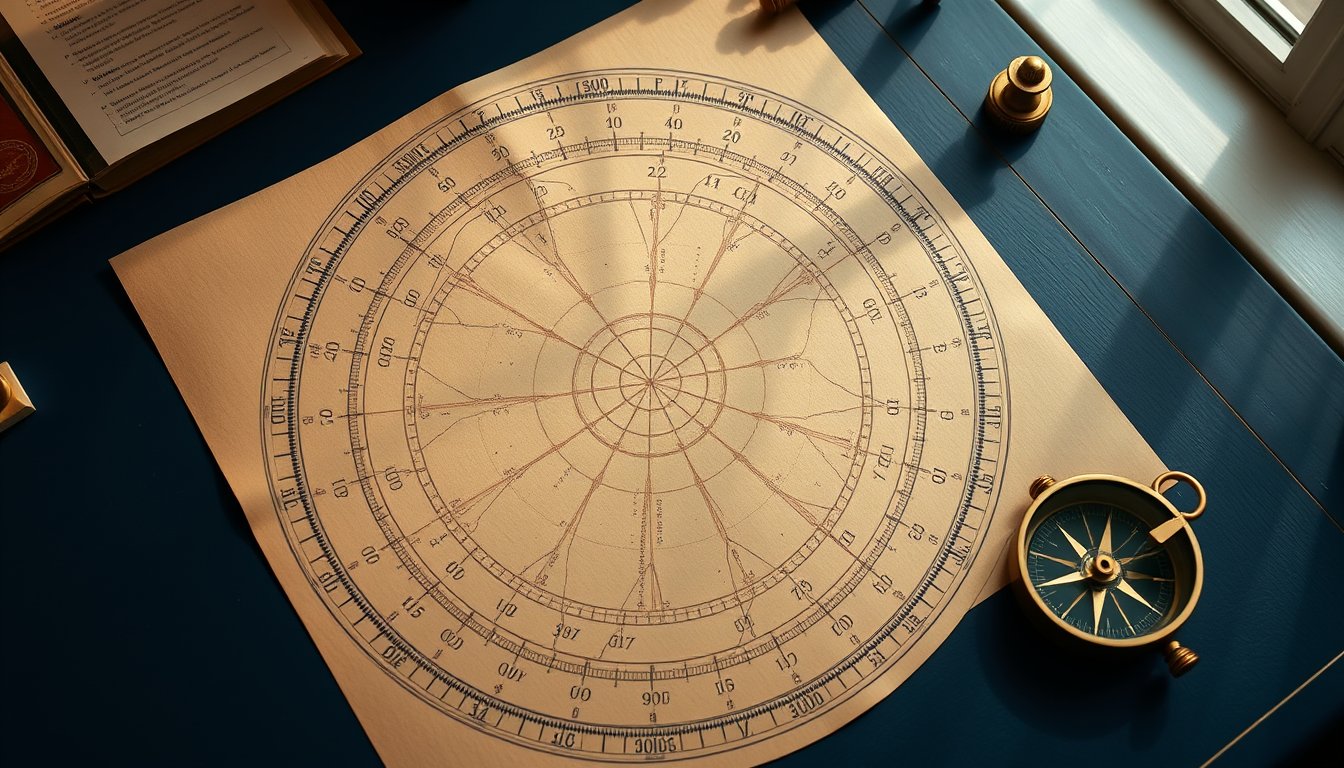
A birth chart is a map of the sky at the exact moment and place you were born. It holds the positions of the Sun, Moon and planets against the zodiac, along with the twelve houses that divide the day into sections. Once you know what each part of the map stands for, reading a chart becomes a matter of working through it in a settled order.
What a Birth Chart Records
A birth chart is a snapshot of the solar system from one spot on Earth at one moment. The date, time and city of birth are enough to work out where each planet stood against the zodiac, which sign it occupied, and how the sky was divided into twelve sections. Nothing in the chart is invented. It is geometry, and the same positions can be calculated for a person, an event or a building.
Two details decide most of the result. The birth time sets the rising sign and the house placements, which shift by roughly one sign every two hours. The birth place converts clock time into local sky, so a chart cast for the wrong city can move the Moon and every house cusp. Astrologers ask for both because without them the chart is only half drawn.
Sign, House and Aspect Answer Three Different Questions
A planet in a sign tells you how it expresses. Venus in Taurus works slowly and prizes comfort; Venus in Aries decides fast and enjoys pursuit. The sign gives tone, never event.
The house tells you where that expression lands in a life. Venus in the seventh shows up in partnerships and in open opponents alike. Same planet, same sign, different house, different story.
The aspect tells you what the planet is doing with the rest of the chart. An aspected planet is in conversation with another; a planet with no major aspects, called unaspected, tends to act on its own terms and can be hard to fit into the rest.
The Four Angles
Four points anchor every chart and are read before the planets.
- Ascendant — The eastern horizon at birth and the start of the first house. It describes the style you meet the world with.
- Descendant — The opposite point, opening the seventh house. It describes what you seek in partners and rivals.
- Midheaven — The highest point of the zodiac at birth, cusp of the tenth. It points to public role and reputation.
- Imum Coeli — The lowest point, cusp of the fourth. It covers home, roots and the private ground of life.
- The Angles as a Set — Read together, they stake out the four corners of a life: self, other, public and private.
Reading a Chart in Order
A settled order keeps a reading from turning into a list of unrelated placements. Start with the Sun, Moon and Ascendant, the three points most people already recognise. Then find the chart ruler, the planet that rules the rising sign, and note where it sits and what it touches, because it carries the chart's main business.
Take the houses one at a time after that, asking which planets occupy them and which sign sits on each cusp. Gather the aspects next: conjunctions first, then oppositions and squares, then trines and sextiles. Patterns count for more than single contacts. A chart with several planets in one sign or house reads very differently from one where everything is spread thin.
Aspect shapes have names worth learning. A stellium is three or more planets in the same sign or house. A grand trine puts three planets in one element. A T-square forms when two planets oppose each other and both square a third. Each shape says where a chart concentrates its energy and where it grinds.
What a Chart Does Not Say
A chart shows tendencies and timing, not verdicts. Two people with near identical charts live very different lives, because the chart describes capacity and inclination, and a life is what a person does with them. Astrologers use the chart to ask sharper questions, not to close them.
Prediction, when it is done at all, leans on transits and progressions, techniques layered over the natal chart rather than read from it. Reading the birth chart is closer to reading a map of temperament. It shows which roads exist, not which one gets taken.